Turkana University College Hosts Transformative Research Conference on Climate Resilience and Innovation
Turkana University College (TUC) successfully hosted the 5th International Multidisciplinary Research Conference from 11th to 13th June 2025 at the University College. The conference, themed “Innovative and Tech-Driven Socio-Economic Transformation: Sustainable and Locally Adaptable Solutions for Climate Resilience in Arid and Semi-Arid Lands (ASALs),” brought together a diverse group of researchers, academics, policymakers, development partners, and students from Kenya and beyond to deliberate on critical challenges and solutions facing ASAL communities.
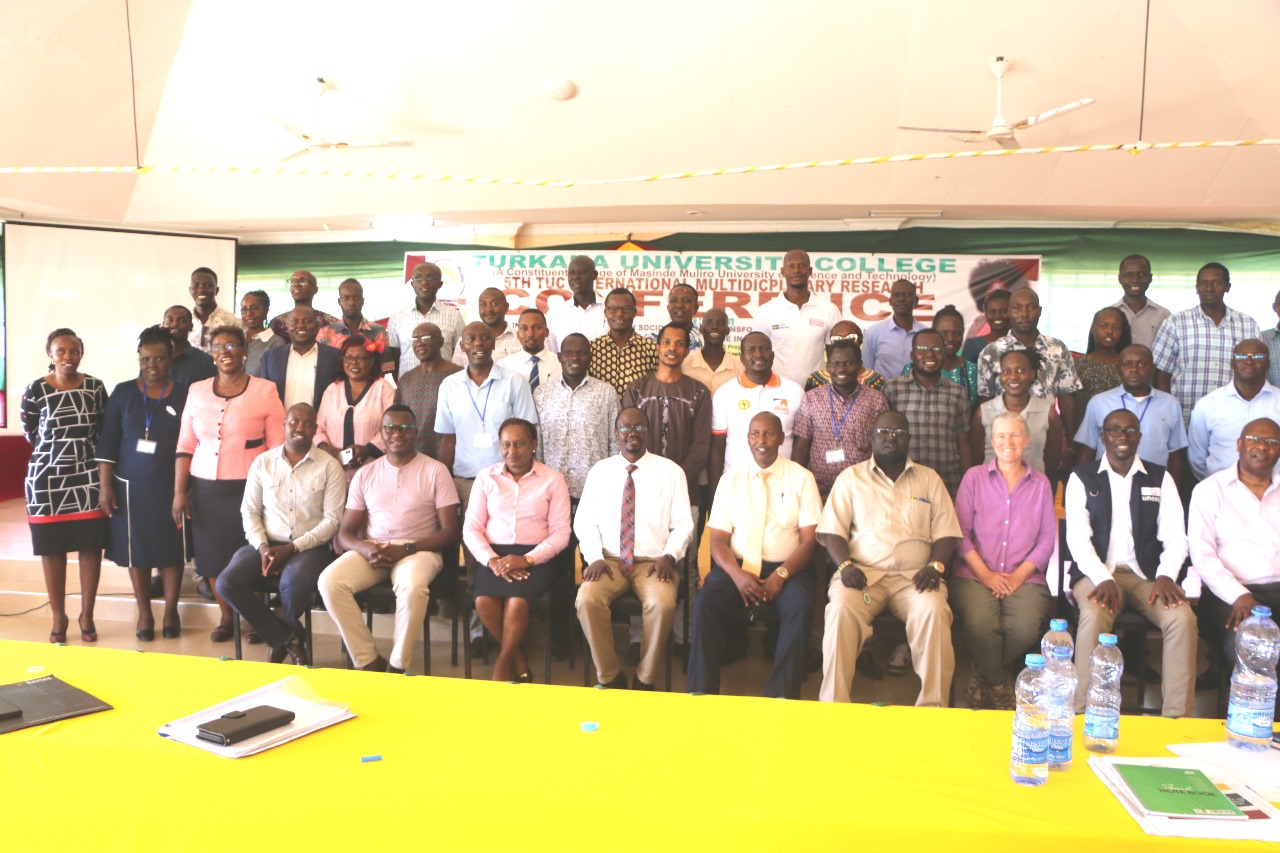
 Turkana University College staff, speakers, presenters and other stakeholders pose for a photo in the university 's college main hall
The official opening ceremony featured remarks from key university leaders, including the Chairman of Council, Dr. Salim Peter Ndemo; the Principal, Prof. George Chemining’wa; Deputy Principals Prof. George Muthaa, Prof. Hellen Wangeci and Prof. Peter Ekwe Edome; the Conference Chairperson, Dr. James Ndiritu and the Director Research, Innovation & Linkages, Dr. Miriti Gervasio. The speakers emphasized the importance of research that directly responds to local challenges and leverages both indigenous knowledge and technological advancements. They also highlighted the university’s ongoing commitment to community engagement and sustainability.
Renowned international and local scholars graced the event as keynote speakers. Prof. Jaume Guia from the University of Girona delivered the keynote address on the first day, exploring the role of human mobility and regenerative approaches in shaping resilient futures. On the second day, Prof. Ruth Wanjau from Kenyatta University addressed inclusivity in education, gender equity, and community empowerment through STEM and research. Dr. Margaret Otieno, CEO of the Wildlife Clubs of Kenya, was a guest speaker who shared insights on climate education and youth engagement in conservation efforts.
The conference program included multiple parallel sessions across various sub-themes, including language and literature, education and pedagogy, climate change and agriculture, science and ICT, and business and economics. More than 120 research papers were presented, touching on topical issues such as the ethical use of artificial intelligence in academia, climate-smart agriculture, the role of mobile banking in economic empowerment, green technology for education and health, and governance in public service delivery.
One of the key highlights of the conference was the emphasis on interdisciplinary collaboration and real-world impact. Presenters and participants discussed how innovations such as AI, IoT, solar-powered irrigation, and indigenous practices can be harnessed to address challenges like food insecurity, gender-based disparities, and resource scarcity in arid regions. The role of universities in policy development and national transformation was also underscored throughout the sessions.
On the third day, participants took part in a field excursion to the scenic shores of Lake Turkana. This experience offered an opportunity for participants to witness firsthand the environmental and cultural context of the region, reinforcing the connection between academic research and lived realities.
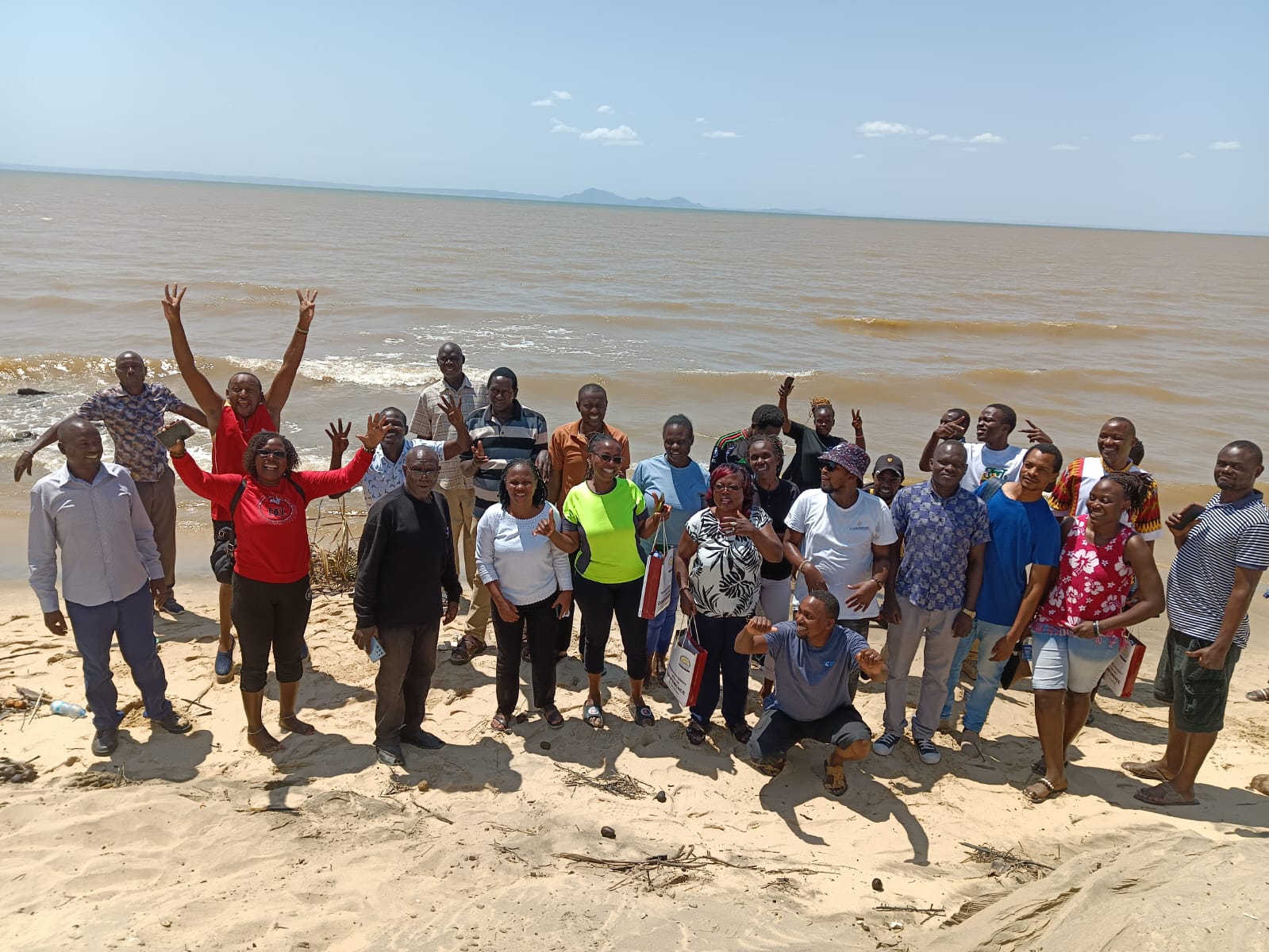 The Turkana University College 5th International Conference team during a visit at lake Turkana
 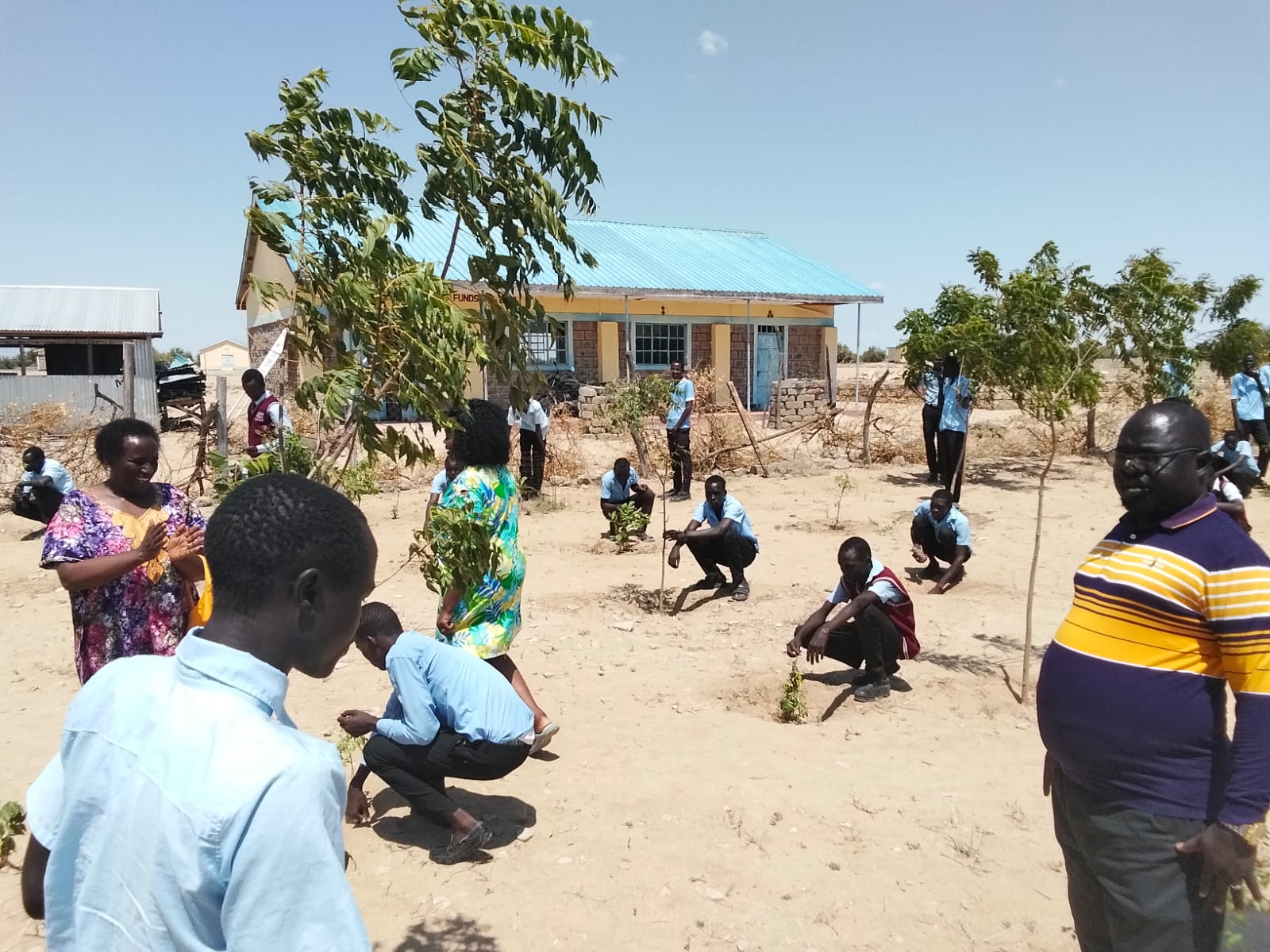 Prof. Peter Edome, Head of the Division of Research, Innovation and Linkages, looks on as the team plants trees at Eliye Boys High School
The conference concluded with a renewed commitment to fostering innovation, research partnerships, and sustainable development tailored to ASAL regions. Turkana University College expressed deep appreciation to all contributors and reiterated its mission to be a hub of transformative knowledge and a driver of inclusive growth. As articulated by several speakers during the event, the 2025 conference served not only as a platform for scholarly exchange but also as a call to action to build climate-resilient communities through locally relevant and scalable solutions.